
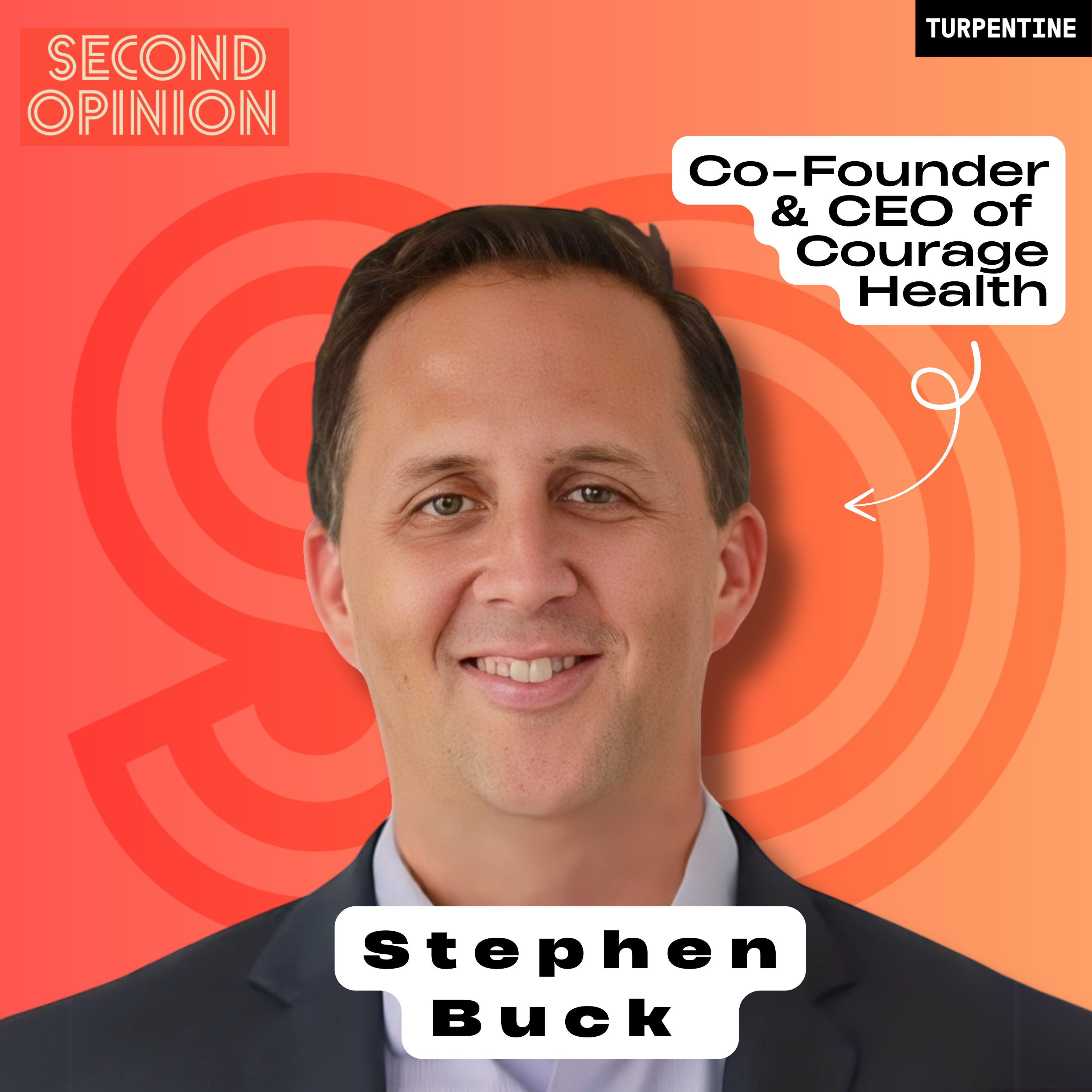
Healthcare’s “original sin” with Stephen Buck, CEO of Courage Health

This week on Second Opinion, Christina Farr and Ash Zenooz interview Stephen Buck, CEO/Co-Founder of Courage Health, a public benefit company providing cancer survival rates to patients and physicians, helping facilitate conversations about living life to the fullest. They talk about the inefficacy of employer-based healthcare, the lack of political bipartisan collaboration, and the rising trend of direct-to-consumer healthcare models.
—
📰 Be notified early when Turpentine drops new publication: https://www.turpentine.co/exclusiveaccess
—
SPONSOR:
🏋🏻♀️Strengthen your cells from the inside-out with Fatty15, a pure C15 supplement proven to boost energy, improve sleep, and support metabolic, heart, and liver health – without the downsides of fish oil. Ready to restore your long-term health? Get 15% off your 90-day subscription Starter Kit at https://fatty15.com/secondopinion using code SECONDOPINION at checkout.
—
LINKS:
Courage Health: https://courage.health/
Stephen Buck (CNBC Healthy Returns): https://www.cnbc.com/2018/03/20/stephen-buck.html
Christina Farr's Second Opinion Newsletter: https://secondopinion.media/
—
FOLLOW:
https://www.linkedin.com/in/christinafarr/
https://www.linkedin.com/in/ashzenooz/
—
HIGHLIGHTS FROM THE EPISODE:
• Bipartisan collaboration is necessary for meaningful healthcare reform.
• Employer-based healthcare creates fundamental misalignments in the American system.
• Short employee tenure (2-3 years) eliminates incentives for long-term health investment.
• Consumers willingly pay premium prices for convenient, private healthcare services.
• Preventive services offered by employers remain largely underutilized.
• "Longevity" branding resonates more effectively than traditional "prevention" messaging.
• Cultural attitudes vary widely regarding health optimization versus quality of life.
• Knowledge gaps exist between specialized medicine and primary care.
• AI tools could potentially serve as co-pilots for patients and clinicians.
• Consumer education about healthcare system misalignments is essential for self-advocacy.

About the author
Christina Farr
Christina Farr is a healthcare writer and investor. Formerly at CNBC and Reuters, she covers digital health, startups, and policy, blending reporting with analysis and investing perspective to help leaders navigate healthcare’s evolving landscape.
New York City